
Annual Beaver Lake Volunteer Day Event: September 29th, 2025 Register Now
New grant! H2Ozarks Launches $615,000 Project to Improve Water Quality in the Lake Taneycomo Watershed! Learn More
Home » Watershed Plans » James River Watershed Management Plan
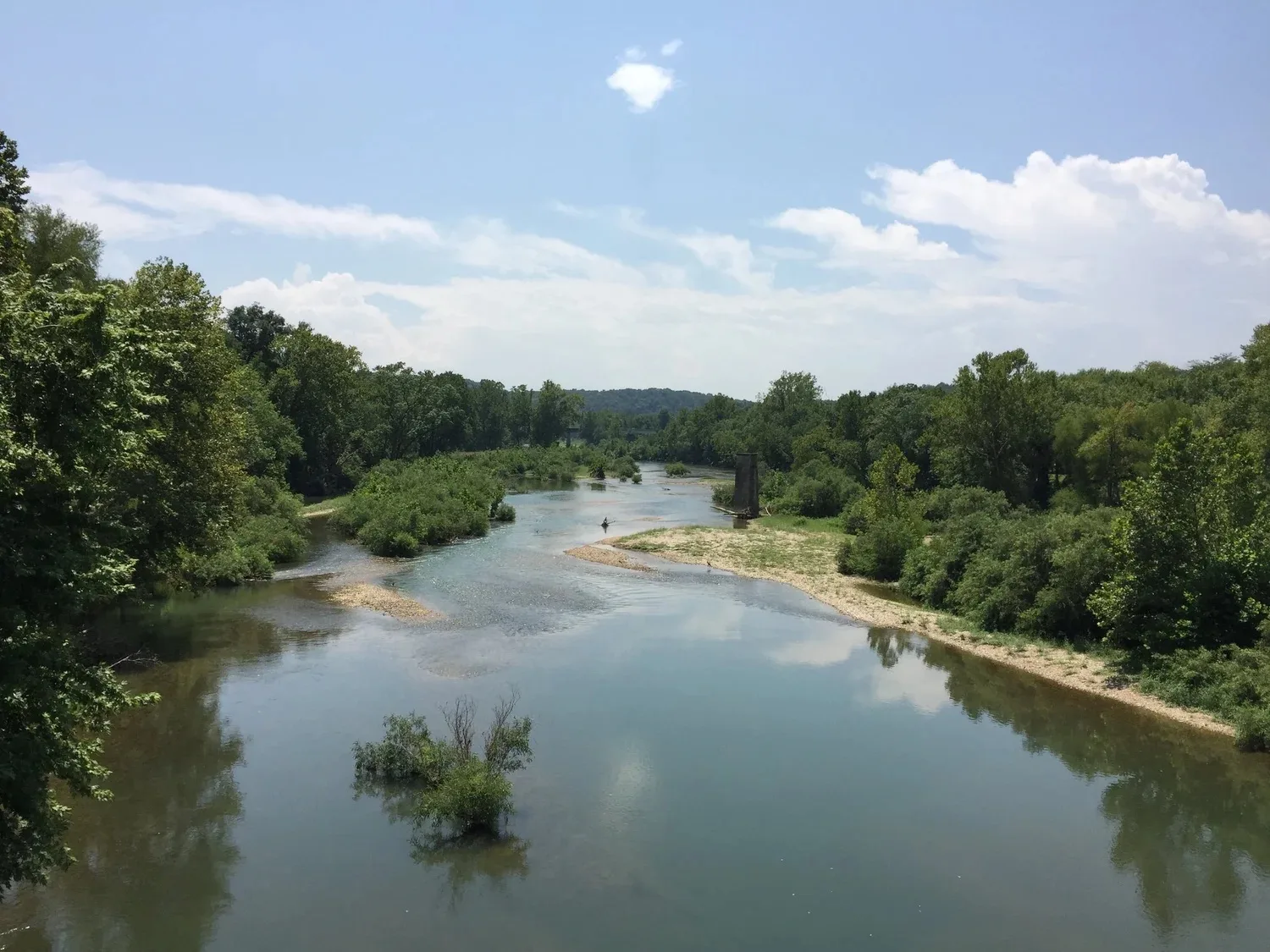
The James River is one of Southwest Missouri’s most historic and iconic rivers. Long before Table Rock Lake and Lake Taneycomo were dammed, the James River flowed 150 miles from its headwaters in Webster County to Table Rock Lake, supporting farms, wildlife, and the people living there. Early settlers relied on its many springs and spring-fed creeks to power grist mills and sustain communities. By the 1920s, the river’s clear water, bluffs, and shoals made it a popular destination for float trips and fishing across the Midwest.
Throughout this history, though, the James River has faced water quality challenges. Large algal blooms in the late 1990s raised concerns about excess nutrient pollution, and a Total Maximum Daily Load (TMDL) plan was placed on the James River to limit pollution and restore water quality for recreation and aquatic life. The excess pollutants come primarily from agriculture—nearly half of the land in the watershed is used for farming, especially for cattle and poultry operations.
The James River Watershed Management Plan, accepted by the United States Environmental Protection Agency (EPA) in March 2021, builds on these earlier efforts. This plan was developed collaboratively with our local communities to provide a roadmap for reducing nutrient and sediment runoff, protecting aquatic life, and safeguarding recreation on the James River and ensuring it continues to flow for many more years to come. Learn more about what a watershed management plan is and what it does here.
This project has been funded wholly or in part by the United States Environmental Protection Agency under assistance G19- NPS-03 to Missouri State University. H2Ozarks, formerly Ozarks Water Watch, was a subaward recipient.
Plan Completed: March 2021
Stakeholders Engaged: 64
Subwatersheds Assessed: 43 HUC-12 subwatersheds
Miles of Land: 1,455 square miles
Pollutants of Concern: Sediment, nitrogen, and phosphorus
Sources of Concern: Runoff from agriculture and urban areas, failing septic systems, streambank erosion, and other sources (detailed in the full plan)
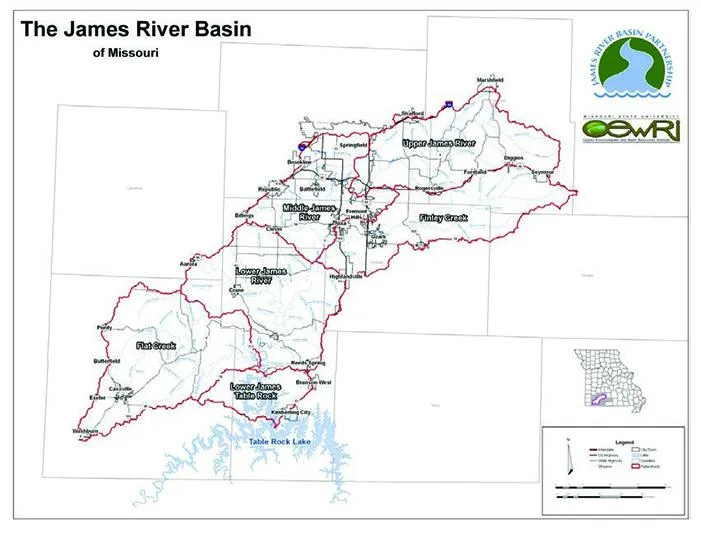
Although watershed planning must be holistic, we also strive to find the most efficient and impactful strategies available. Some smaller areas, or subwatersheds, experience unique issues that contribute more pollutants than other areas. In the James River Watershed, 9 subwatersheds ranked highest for restoration activities based on water quality impairments, resource concerns, and nutrient and sediment loading. By finding and focusing on these high contributing areas, we can target our efforts where they will have the most impact.
H2Ozarks (formerly as Ozarks Water Watch) Septic system demonstration program in the Crane Creek watershed.
