
When Trevor bought his first home in Madison County, Arkansas, he was excited to start a new chapter. He had done everything right: saved up his down payment, had the inspections, and signed all the paperwork. But under the surface, his new home had a major, unseen problem.

“The first day that I moved in, I flushed the toilet, and it backed up.”
“I didn’t know anything about the septic system. I’ve always lived in the city, and I wasn’t real familiar with it.” Trevor said.
Many first-time homebuyers are like Trevor, and unfamiliar with what to look for when it comes to septic systems. During the home inspection, Trevor was offered an optional septic inspection, but it cost an additional fee. During the walkthrough, the water was running. The toilets flushed. No obvious issues. Trevor skipped the voluntary septic inspection.
“I didn’t think it would be a big deal since I know a little bit about plumbing,” Trevor explained. “And all the water was running fine when they did the inspection.”
But an unoccupied home doesn’t tell the whole story. The first day Trevor moved in, he flushed the toilet once—and it immediately backed up.
An Invisible, Underground Problem
Trevor searched for a solution, but his efforts led from one bad discovery to another:
- There were no permits, diagrams, or records on file.
- He couldn’t tell how old the septic system was.
- He didn’t even know where the septic system was located.
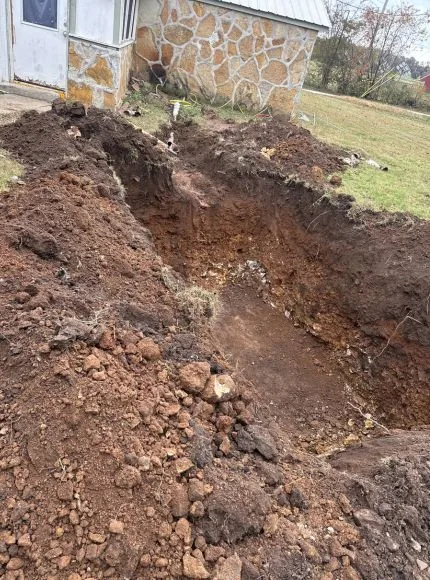
Once Trevor paid to have the system located, he found that the tank was partially placed on the neighbor’s property—underneath a shed!
After Trevor explained to his new neighbors that his failing septic system was technically on their property (and under their shed), he bought two shovels and started digging. He was lucky to have cooperative neighbors, but the whole situation underscored just how vulnerable he was due to the lack of a required septic system inspection.
Living With a Failing Septic System
While Trevor tried to solve his septic nightmare, he still had to live in his home. His daily life became a calculation of how to ration out his water use. Every time he took a shower or turned on a sink, he was at risk of the drains backing up.
At first, Trevor paid over $400 to have the tank pumped, thinking that would solve the problem.
“I thought that pumping fixed it, but five weeks later, I couldn’t flush the toilet or run water again. I had to get it pumped out again (for another $400). And then that’s when I figured out that that septic was probably bad.”
There was no telling what the issue was; Trevor was determined to do as much as he could.
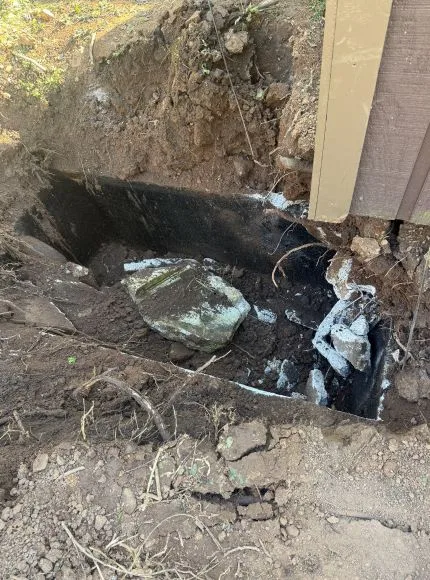
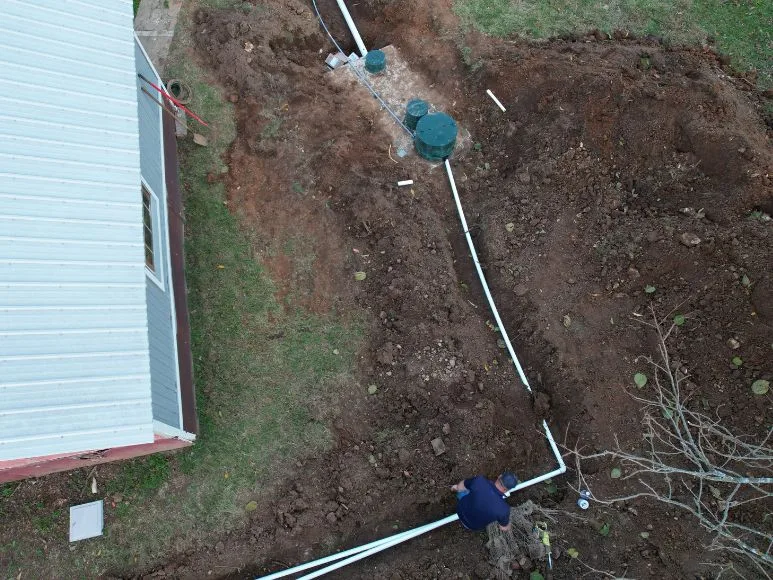
“I spent a while digging,” Trevor told us. “It was the craziest thing I’ve ever seen. There were no lateral lines! Just one drain going into a concrete box in the ground.” Lateral lines, or seep lines, help evenly disperse partially treated wastewater coming from the septic tank so it can filter through the groundwater. These lines are part of the drainfield of a septic system and are made of rows of narrow pipes with little holes, buried shallowly underground.
What Trevor described to our program manager, Stefanie, was likely a “DIY” septic tank, which is common in rural communities. While regulation was established in 1977 requiring most new homes to have a septic system permit, some backyard projects slip through the cracks.
At that point, Trevor knew he needed an entire new septic system. As a new homeowner already managing other unexpected repairs, the idea of financing a $12,000 septic replacement at market interest rates was daunting.
Finding a Solution: the H2Ozarks Septic Program
Trevor heard about our program through a professional colleague, but at first, he doubted he would qualify.
“I was like, nah, I doubt I’m getting any assistance,” he said. “But I made a phone call to Stefanie, and it ended up working out.”
The program works by providing a combination of reimbursed grant money and zero-interest loans, with the grant based on one’s income level. While Trevor didn’t qualify for a grant, he did get a zero-interest loan — as can anyone, regardless of their income level. The zero-interest loan covered the entire system replacement: tank, drainfield, construction costs, and all the components—totaling $11,956.
Without the program, Trevor would have needed a private loan at a high market interest rate. Instead, he secured stable, manageable monthly payments without added financial strain. Trevor has 10 years to pay back the full loan amount.
“Absolutely it helped,” he said. “To get the loan and not have to pay interest… that’s made a huge difference, especially with all the costs I’ve already incurred with this house.”
A Straightforward Process
Trevor described the application process as simple and clear. “Overall, I would say it was easy and straightforward. Stefanie communicated what to do and when to do it.”
The entire process—from the first phone call to the final dirt over the brand-new system—took five months. Trevor was able to permanently resolve the issue.
Now, Trevor’s septic system functions properly. It’s fully located on his own property, is built to modern standards, and treats wastewater safely. Trevor can finally enjoy his new home.
Why This Story Matters
Trevor’s experience highlights a reality many rural homeowners face:
- Septic inspections are not always required for home purchases (in the state of Arkansas).
- Failing systems can go undetected until move-in day.
- Records for older systems may not exist.
- Repair costs can be overwhelming without assistance.
The H2Ozarks septic program overcomes these barriers. We help homeowners permanently solve serious wastewater issues—protecting their homes, their finances, and health and safety.
As Trevor put it, it’s something every homeowner with septic issues “needs to look into.”