- Education, Table Rock Lake, Water Quality


When we think about home disasters, we usually think about trees falling on the roof or the pipes bursting. But when a septic system fails, it can destabilize your life and upheave your home just as badly. When Jerri’s septic system started failing, she had few options as a retired single homeowner. The failure was so significant it threatened her ability to remain in the generational home her father built more than 50 years ago. It took over $30,000 dollars, five months, and an installer willing to go the extra mile to get Jerri’s life, and septic system, back on track.
Jerri first realized something was wrong when a friend noticed water standing in her basement. But this wasn’t ordinary rainwater — the basement had filled with sewage, and the floor drain was clogged. The culprit was her aging septic system, which had been installed over half a century ago. The average septic system lasts for 25-40 years, and Jerri’s had reached the end of its lifespan.

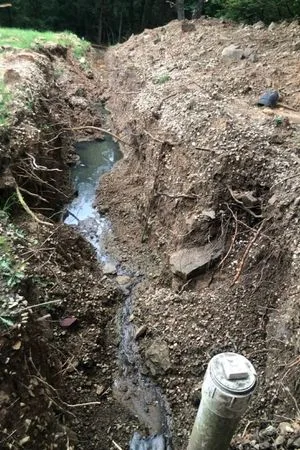
Finding the source of failure quickly became complicated. No one could find where the septic tank was located. Because the home had a basement, the septic tank was buried much deeper than usual, and contractors dug a trench along the sewer line just to locate the tank. Jerri spent thousands of dollars out of pocket on investigations, design work, and emergency efforts just to get answers.
It was determined the entire septic system would have to be replaced — that meant digging out the existing tank and replacing all the lines in the drainfield. But the site had significant challenges: the house sat on a hill, the existing tank was located downhill, and the new drainfield needed to be installed uphill in the front yard. . Contractor after contractor declined the work.
“[They] come out and look at it, but they don’t want the job because it’s going to be too big,” Jerri explained. Several bids were exorbitantly expensive, and as a retiree on a fixed income, Jerri’s options were limited. She spent hours making phones calls, trying to find someone who could finish the work that had been started.
Meanwhile, the failing system was disrupting Jerri’s daily life. Her belongings in her basement were ruined. Fearing additional sewage backups, she drastically reduced her water use.
“I cut down everything [that required water]. I had to go to an Airbnb or hotel to take a shower. I just evacuated my home,” Jerri told us.
At one point, Jerri’s stress became so bad she considered selling personal belongings to pay for repairs, and she worried she might have to sell the family home altogether.
“I was trying to sell anything I had to come up with the money. I don’t know what I would have done [without H2Ozarks]. My brother said I should just sell the house, but I couldn’t do that, our daddy built it.”
Jerri’s story turned a corner after she connected with Stefanie, who manages the H2Ozarks’ Septic Tank Remediation Program. Jerri credits Stefanie with helping her navigate an overwhelming process. Stefanie could answer questions, connect Jerri to septic professionals, coordinate details, and provide guidance when she felt lost.
“Stefanie was my angel,” Jerri said. “I felt like I’d been rescued.”
Stefanie also helped Jerri find the right installer — Josh Boyd stepped in after many others had passed on the job.
“I started doing this work by taking the jobs nobody wanted,” Boyd said, when asked why he would take such a complicated system. “I learned a lot that way.”
“Jerri’s [system] was a little bit challenging… but she’s one of those people that makes it worth doing. She appreciates the work.”
With the right people on the job, Josh went to work replacing Jerri’s septic system.
There was still one last surprise in When Josh went to dig out the old tank, what he found shocked him — it wasn’t an industry-standard concrete tank, but an old metal propane tank. Jerri told us the tank was installed by her father.
“It was pretty neat. That’s the first time I found a propane tank.” Boyd said.
While repurposed materials might seem useful, wastewater can create corrosive gasses that degrade metal. Concrete, plastic, or fiberglass septic tanks are the industry standard used today.
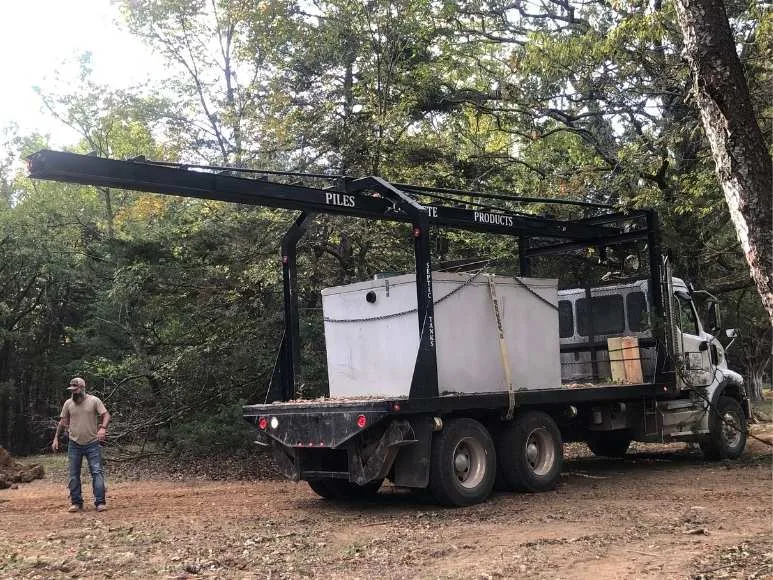
To fix the system, Boyd’s crew installed a new concrete septic tank where the propane tank used to sit. Due to poor soils that drain slowly and have trouble absorbing wastewater, they also added a pump system that transports wastewater 240 feet uphill to a drainfield in Jerri’s front yard. The new drainfield holds eight 100-foot lateral lines and a curtain drain to address the difficult soil and drainage conditions. It was one of the more complex residential systems Boyd had tackled.
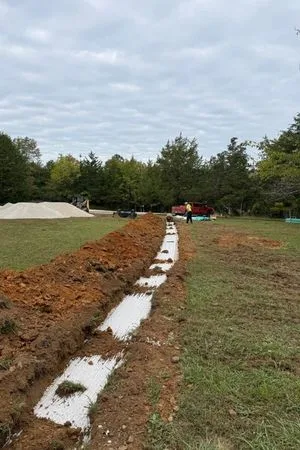
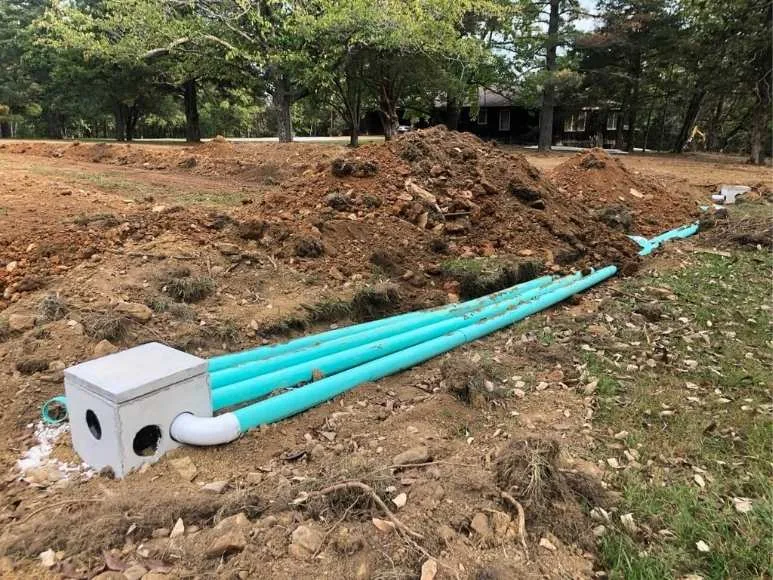
Thanks to a solution-driven installer and the financial assistance from H2Ozarks, this project was completed in October 2025, restoring reliable wastewater treatment to the property and protecting local water quality.
The difference it’s made in Jerri’s daily life isn’t taken for granted.
“I can take a shower, flush the toilet, even run a dishwasher,” Jerri said with almost reverence.
Jerri can finally live in her home again. She can use her water without fear of sewage backing up into the basement. The problems that once dominated her daily life have disappeared. And just as important, Jerri was able to stay in the home her father built, which holds irreplaceable significance and family legacy. What once felt like an impossible and tragic situation is now a success story thanks to the partnership and financial assistance we were able to provide.
For Jerri, the project was about far more than replacing a septic system. It restored peace of mind, protected a family home, and allowed her to continue living safely and comfortably in the place she loves.
The H2Ozarks Septic Tank Remediation Program is made possible by funding from the Arkansas Department of Agriculture Natural Resources Division.