- Septic, Success Stories

Annual Beaver Lake Volunteer Day Event: September 29th, 2025 Register Now
Registration is now open for our fall shoreline cleanups! 🤝 Sign up your team today!
Date:
Read Time:
Author:
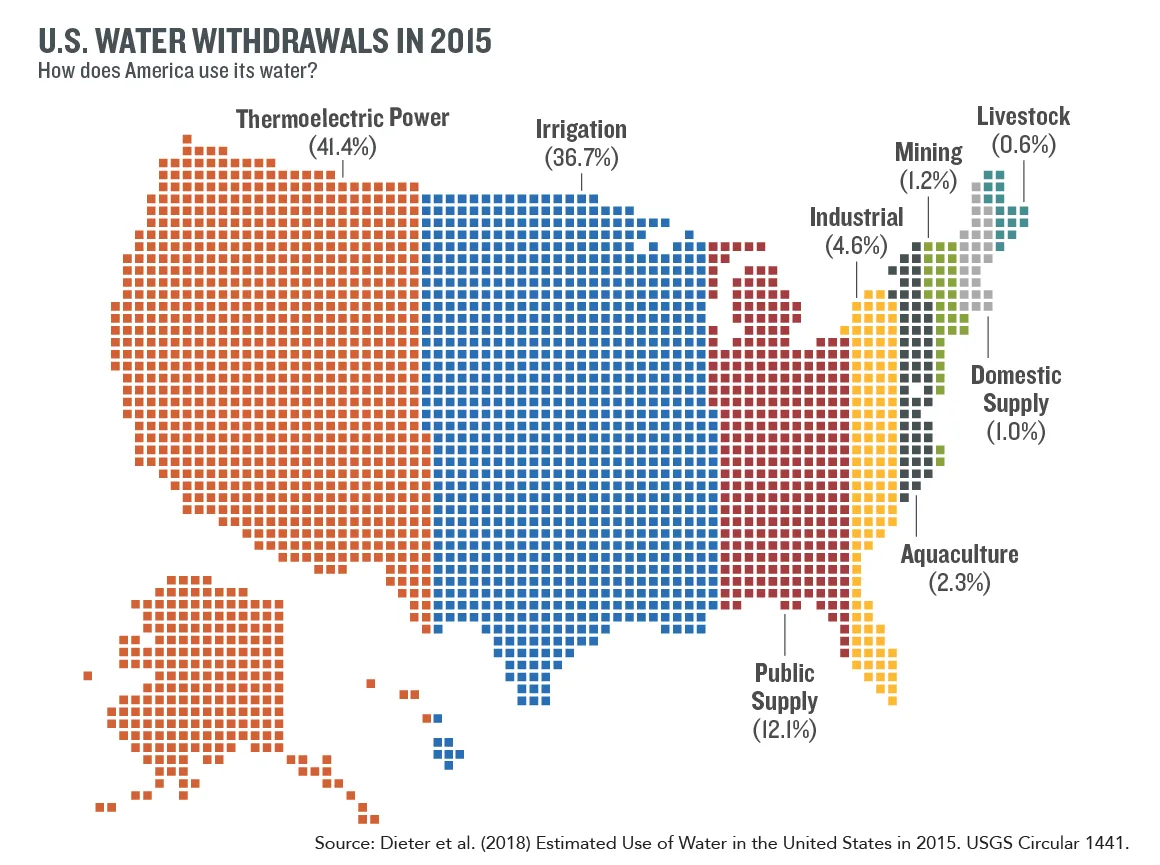
In the first two articles of this series, we looked at how AI datacenters use water and how that water use compares to the rest of the country’s water consumption. One theme kept surfacing – it’s hard to know how much water any given datacenter uses because so much of that information is not available to policy makers or the public.
Datacenter operators aren’t required by federal law to disclose much about their water use, and the few federal guidelines only apply to very large facilities. That leaves most oversight up to states – and most currently have no requirement that datacenters report their actual water use on an ongoing basis. In at least one case, leaked internal emails at a major tech company revealed efforts to obscure true water-use figures for its datacenters.
Communities, water utilities, and elected officials cannot weigh the costs and benefits of a proposed datacenter without accurate information about how it will impact our water resources. States and municipalities across the country are figuring out different ways to close that information gap and create informed policies. This article looks at a few examples, offering a preview of what smart, sustainable datacenter development could look like here in the Ozarks.
A quick note: the landscape for AI datacenter development is rapidly changing; the information cited in this article may be outdated even in just a few months, but the core principles can still be applied to future actions.
People usually want to have a voice in what is built in their communities. Too often though, a datacenter is proposed, approved, and built before the public gets a chance to weigh in. Policies that require environmental reviews, enforce disclosures to the public, or limit the use of non-disclosure agreements (NDAs) could all help ensure that local communities can make informed decisions about the kinds of development they want in their communities.
For example, Pima County, Arizona reformed their policies on NDAs after fallout over a secretive datacenter project in the community. The new policy limits NDAs to two years and requires environmental reviews so decision makers can understand the expected impacts on water resources, air quality, and economic outcomes. Over 10 states have proposed policies this year that either limit or ban NDAs related to datacenter development.
Virginia, home to over 600 datacenters, passed a transparency law in 2026 that requires water utilities to break out and report how much water they sell specifically to datacenters, separate from other use categories.
At the federal level, both the proposed Data Center Transparency Act in the House and the Data Center Water and Energy Transparency Act in the Senate would require regular reporting to the public on datacenter water and energy use, but that is a much longer road to turn those proposals into law. For communities who are facing datacenter development now, they can’t wait for federal law to catch up.
So far, most regulations for datacenters have come from the local level. Cities and counties can impose ordinances or change zoning laws more quickly while state or federal level legislation works its way through the system.
For example, Kansas City has become a hotspot for datacenter development with over 30 datacenters, which may be incentivized by Missouri tax breaks (Arkansas and many other states also have tax breaks for datacenter development). To manage this influx, the city passed new regulations early in 2026, changing zoning rules to create a new category specifically for datacenters. Now, datacenter plans will need public feedback and approval from the city council. Notably, the city council mentioned receiving thousands of emails from community members regarding datacenters.
Meanwhile, it’s likely illegal in Arkansas to outright ban datacenters, but communities have requested their local representatives to do so. Instead, Fayetteville, Arkansas, recently passed ordinances that require datacenters to comply with significant reporting and environmental reviews. The new ordinances require an energy management plan, anticipated water use, the identification of potential chemicals in wastewater, and that developers submit “sufficient evidence showing their operation would not negatively impact water and electricity customers”, according to the Fayetteville Flyer. This sets a high bar that holds developers accountable to the communities they would impact. Measures like this that ensure datacenters are built sustainably are more likely to garner public trust.
Elsewhere in Arkansas, Little Rock has faced significant community pushback after a $1 billion hyperscale AI datacenter was announced by Google. In response, the city unanimously passed new ordinances that ban evaporative-cooling systems that don’t recycle water, require reports on water utilization and efficiency, and mandate that datacenters get a letter from the utility companies confirming there’s enough grid capacity to serve them.
Little Rock is served by Central Arkansas Water, who supplies drinking water to over 500,000 Arkansans, sourced from Lake Maumelle and Lake Winona. The utility has issued several statements about the proposed datacenter on the website https://lrdatacentersfacts.com/, stating that the lakes can supply up to 120 million gallons per day (MGD), and that peak demand of over 100 MGD only occurred five days in 2025. Google has also committed to pay for their own buildout to prevent increased costs to the public. This is vital information that helps community members create informed opinions. However, skepticism remains, and some Little Rock residents are seeking a temporary moratorium to prevent the Google datacenter
from being built.
At the end of the day, what many communities want is straightforward: to have their concerns taken seriously, and to see development move forward in ways that don’t put their water, environment, or homes at risk. Most communities aren’t opposed to datacenters altogether — they’re asking for zoning laws and ordinances that address their needs. When communities are kept in the dark, or are given misleading information about how a project will affect them, it becomes harder to build the public trust these projects need to succeed.
One theme that has run through this series is how localized the impacts of datacenters are. The strain a datacenter places on a community’s water supply depends, in part, on the existing water sources, climate, and current demand. Compared to many parts of the country — especially out west — the Ozarks are fortunate to sit in a region with abundant water resources. Our lakes, creeks, rivers, and streams are what makes this place home for so many of us. These waterbodies support the drinking water, recreation, and local economies our communities depend on. Protecting them, for ourselves and for future generations, is worth the effort.
So far, it’s been local communities driving most of the progress on this issue, whether by pushing for environmental reviews, disclosure requirements, or updated zoning. Keeping that momentum will take continued engagement: reaching out to elected officials and making clear what kind of development we want to see here in the Ozarks.
The question is no longer whether AI datacenters will be regulated — it’s how. And as the examples in this article show, that’s still very much up to us.
Our staff work hard to help provide relevant, researched, and local information about our water resources in the Ozarks. If you learned something new, please consider supporting our work so we can continue to provide free and helpful information in the future.

Get updates on our projects, events, and water quality issues in your area.